
by Georgea
January 9, 2026



Trade shows are a pivotal opportunity for businesses to showcase their products, network, and engage with potential customers. A well-designed exhibit can significantly impact your brand's presence and success. However, one of the critical decisions businesses face is whether to rent, buy, or adopt a hybrid approach for your exhibit.
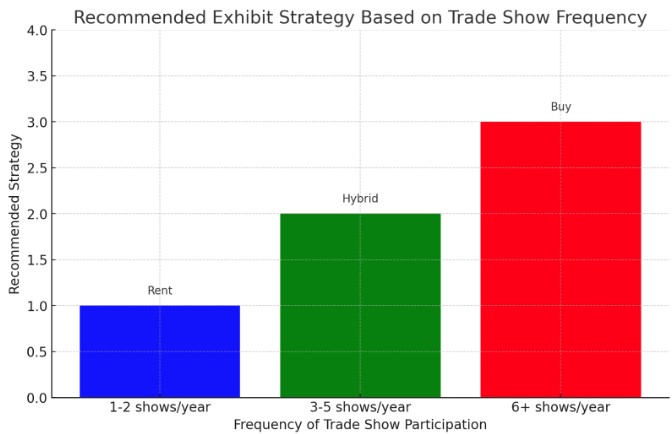
Consider how often your company attends trade shows when deciding to rent or buy an exhibit:
Frequency | Recommended Option | Rationale |
High (6+ shows/year) | Buying | Lower long-term costs, high customization |
Moderate (3-5 shows/year) | Hybrid | Balance of cost and flexibility |
Low (1-2 shows/year) | Renting | Lower initial cost, no storage |
Budget is a critical factor in deciding whether to rent or buy a trade show exhibit. Here’s a breakdown of the budget-related considerations for each option:
Initial Costs: Renting usually has lower upfront costs, making it ideal for companies with limited budgets.
Long-Term Costs: Renting may be cheaper at first, but costs can add up if you attend many shows. Buying has a higher initial cost but can be cheaper over time for frequent participants.
Hidden Costs: Owning an exhibit means paying for storage, maintenance, and repairs. Renting avoids these costs but may include fees for damage or late returns.
Expense Type | Renting | Buying |
Initial Cost | Low | High |
Long-Term Cost | High (for frequent shows) | Low |
Storage & Maintenance | None | Required |
Customization Fees | Possible | One-time |
Customization and branding are vital to making your trade show exhibit stand out and effectively convey your brand message. The level of customization available differs between renting and buying:
Renting: Rental exhibits typically offer less customization. While you can brand rented exhibits with graphics and signage, the structural design is usually standard.
Buying: Owning an exhibit allows for full customization. You can design the structure, layout, and graphics to perfectly match your brand's image and marketing goals.
Renting:
Basic branding with graphics and signage
Standard structural designs
Buying:
Complete control over structure and layout
Custom graphics and interactive elements
Renting an exhibit is practical and cost-effective, especially for businesses new to trade shows or with limited budgets. Key benefits include:
Lower Initial Costs: Less upfront investment, ideal for startups and small businesses.
Flexibility: Easily change designs for different shows to target various audiences.
No Storage or Maintenance: The rental company handles these, saving time and costs.
Access to Latest Designs: Stay current with modern, attractive exhibits without frequent purchases.
Try Before You Buy: Test different designs before committing to a purchase.
While renting an exhibit has its benefits, there are also some drawbacks to consider:
Potentially Higher Long-Term Costs: Frequent rentals can become more expensive than buying.
Limited Customization Options: Standard designs may not fully reflect your brand.
Availability Issues: Popular exhibits may be unavailable during peak seasons.
Dependency on Rental Company: Any issues with the rental company can affect your experience.
Damage Fees: Potential extra costs if the exhibit is damaged.
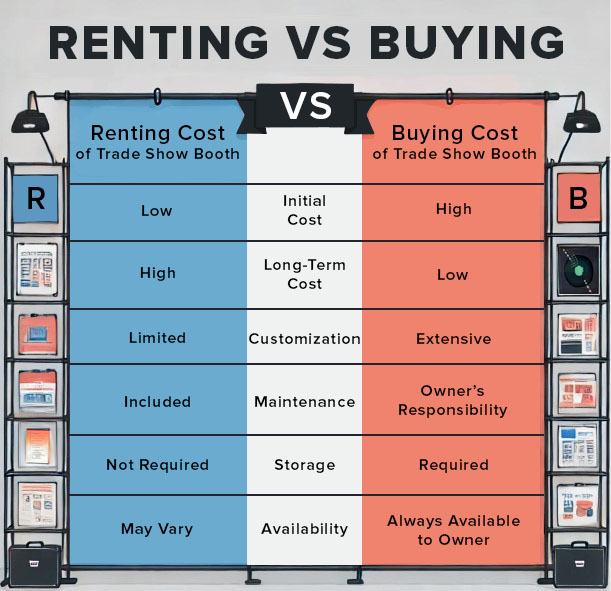
Factor | Renting | Buying |
Initial Cost | Low | High |
Long-Term Cost | High (for frequent shows) | Low |
Customization | Limited | Extensive |
Maintenance | Included | Owner's responsibility |
Storage | Not required | Required |
Availability | May vary | Always available to owner |
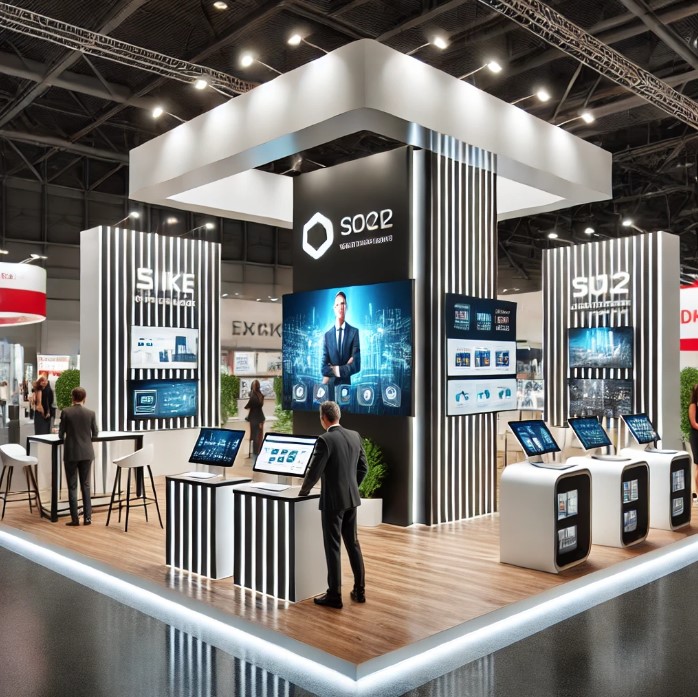
Buying an exhibit is a significant investment, but it offers key benefits, especially for frequent trade show participants:
Full Control Over Design and Customization: Complete design and customization to perfectly represent your brand.
Cost-Effectiveness for Frequent Participants: More economical long-term for regular attendees, reducing cost per use.
Consistency in Brand Presentation: Ensures a high-quality, consistent presentation at each show.
Potential for Long-Term Savings: Eliminates recurring rental fees, freeing up budget for other activities.
Flexibility to Make Modifications: Allows modifications and updates to adapt to new trends and requirements.
Despite the many advantages, buying an exhibit also has its downsides:
Higher Initial Costs: High upfront cost can be a barrier for smaller companies.
Storage and Maintenance Requirements: Responsibility for storage, maintenance, and repairs adds to costs and logistics.
Risk of Becoming Outdated: Trade show trends and technologies are constantly evolving, requiring further investment.
Less Flexibility for Different Shows: Committed design limits adaptability for different shows.
Logistical Challenges: Transporting and setting up is complex and time-consuming.
A hybrid approach involves combining elements of both renting and buying trade show exhibits. This strategy allows businesses to leverage the benefits of each option while minimizing their respective drawbacks. By selectively renting and owning different components of the exhibit, companies can achieve a balance that suits their unique needs and objectives.
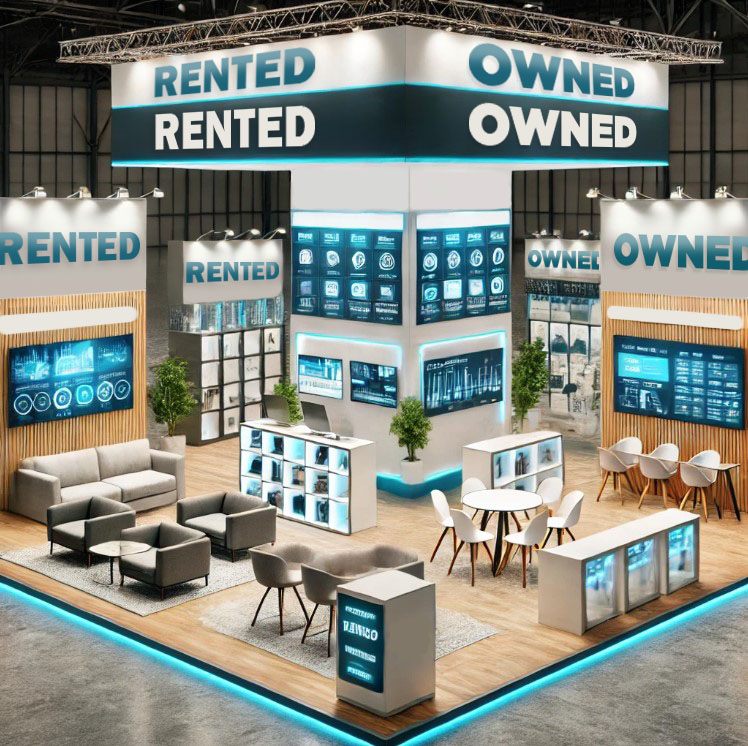
Adopting a hybrid approach offers several advantages that can enhance your trade show strategy:
Flexibility to Adapt: Adapt to different shows and audiences without a complete overhaul.
Cost Management: Balance initial investments with lower rental costs, ideal for fluctuating budgets.
Enhanced Customization: Own key elements for customization, rent components to update the design.
Reduced Storage and Maintenance: Minimize storage needs by owning only essential parts.
Testing New Concepts: Experiment with designs before committing to a full purchase.
While a hybrid approach offers many benefits, it also has some potential downsides:
Higher Complexity: Managing both rented and owned components requires careful planning.
Logistical Challenges: Transporting, setting up, and dismantling can be more complex, often involving multiple vendors.
Potential for Inconsistency: Mixing components may result in a less cohesive appearance, requiring attention to detail.
Case Study: Successful Hybrid Strategy Company XYZ, a mid-sized tech firm, adopted a hybrid approach for their trade show exhibits. They purchased a custom-designed central display unit that reflected their brand identity and rented peripheral elements such as furniture, lighting, and smaller display stands. This strategy allowed them to maintain a strong brand presence while adapting to different trade show environments and managing costs effectively.
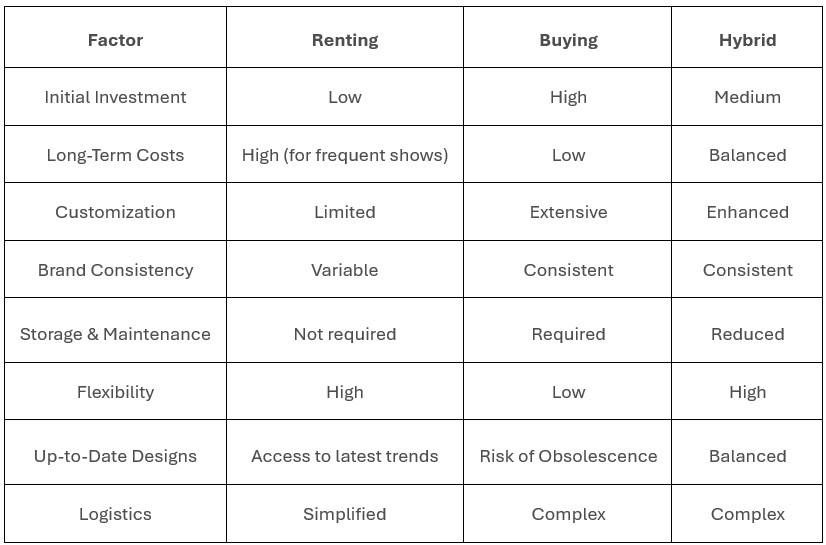
Understanding your company's goals for participating in trade shows is crucial for making the right decision between renting, buying, or adopting a hybrid approach. Here are some key questions to consider:
Determining whether your trade show needs are more immediate or long-term will help guide your decision.
Create a budget plan for both immediate and future expenses:
If your company currently rents trade show exhibits but is considering purchasing one in the future, the following steps can help ensure a smooth transition:
Adopting a hybrid approach involves combining rented and owned components to maximize flexibility and cost-effectiveness.
Scaling your trade show presence involves adapting your exhibit strategy to match your business growth and market demands.
Choosing between renting, buying, or a hybrid approach for your trade show exhibit is crucial for optimizing your strategy and achieving business goals. The best choice depends on your company's needs, budget, and objectives.
Q1: Is it cheaper to rent or buy a trade show exhibit?
Q2: How often should a company participate in trade shows to justify buying an exhibit?
Q3: Can I customize a rented exhibit to match my brand?
Q4: What are the hidden costs of owning a trade show exhibit?
Q5: How can a hybrid approach benefit my business?
Georgea
Georgena