
by Georgea
January 9, 2026


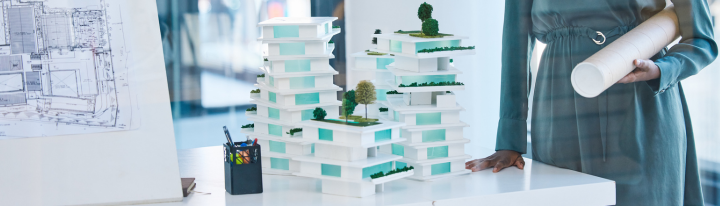
When you walk a trade show floor, the biggest booths usually get the first glance, but not always the best conversations. Attendees move fast, scanning for whatever feels easiest to understand and most worth their time. And that is exactly where a tabletop trade show display can surprise you.
A smaller setup removes the clutter, sharpens your message, and puts the focus right where it belongs: on the product and the people presenting it. Instead of relying on towering structures or oversized graphics, you are working with a format that forces clarity, and clarity is what pulls the right visitors in.
Tabletop displays are not a fallback option. With the right strategy behind them, they often deliver tighter engagement, stronger interactions, and a better overall flow than booths twice their size.
For years, exhibitors assumed that bigger booths automatically meant more impact. But on a busy show floor where attention is split in every direction, size often becomes a disadvantage. Visitors are bombarded with visuals, messages, and competing displays, which means they tend to gravitate toward what feels simple, clear, and easy to engage with.
A tabletop trade show display removes the noise. Without towering structures or a dozen competing elements, the visitor’s eye lands instantly on what matters. The space feels more approachable, the message is easier to absorb, and the interaction begins faster. In an environment where clarity prevails, small formats often foster stronger connections than large, complex builds.
A tabletop trade show display is much more than a small-format solution. It creates a focused environment that helps visitors understand your offer more quickly, reduces visual clutter, and gives your team greater control over the interaction. These advantages become even more noticeable on busy show floors where attention spans are short and competition is high.
Tabletop formats naturally limit clutter, making your core message easier to see and understand. Instead of competing with oversized graphics or long blocks of text, visitors immediately notice the one idea you want them to take away. This clarity helps them decide, within a few seconds, whether your offer is relevant to them.
With fewer barriers between your team and the attendee, conversations start quickly and comfortably. People feel more inclined to step closer, ask questions, or try a demo, which creates meaningful interactions without the pressure of a large, intimidating setup. These faster touchpoints often result in higher-quality leads.
Unlike larger booths that require crews, tools, and tight schedules, tabletop displays allow your team to move freely and adapt on the spot. If traffic flow changes or a better position becomes available, the booth can be shifted with minimal effort. This flexibility helps your team stay visible and responsive throughout the event, even in the face of the unexpected.
A tabletop setup may be compact, but the right design choices can make it feel intentional, polished, and surprisingly high-impact. When every inch is utilized with purpose, a small display can capture attention far more effectively than a larger booth that tries to do too much. Good design does not aim to compensate for size; it uses size to your advantage by creating a clean, controlled visual moment that visitors can instantly absorb.
Because a tabletop trade show display has limited space, it forces you to build a visual path that naturally leads the visitor from one key element to the next. A strong focal point at the top, a clear message at eye level, and supporting elements placed lower in the frame help people process your offer in the right order and without confusion. Large booths often lose this clarity due to competing graphics and multiple sightlines, but a smaller display lets you guide the gaze with precision and intent.
At one industry event, a mid-sized tech brand entered with nothing more than a clean, well-organized tabletop setup and a sharp message. Right next to them stood a towering island booth filled with screens, structures, and layered graphics. By midday, something unexpected happened. The large booth drew glances, but the small booth drew conversations. Attendees stopped more frequently, stayed longer, and asked more insightful questions. The team left with stronger leads than many exhibitors who had spent ten times more on footprint alone. It was a reminder that attention and impact do not always scale together.
Smaller formats excel in environments where clarity and speed are more important than spectacle. When visitors are trying to understand a product or evaluate a solution quickly, a streamlined display gives them exactly what they need without the pressure of stepping into an oversized space. Tabletop setups reduce hesitation and encourage natural, low-friction engagement, which often leads to more meaningful conversations.
Most attendees are filtering information nonstop. They walk the floor looking for something they can grasp immediately, something that feels approachable rather than overwhelming. A small display removes the social barrier of entering a large booth and eliminates the visual overload that can make people disengage. When the experience feels simple and comfortable, visitors are more likely to stop, ask questions, and stay long enough to form a genuine connection with your team.
In all of these scenarios, the tabletop format proves to be an advantage rather than a limitation. When the message is clear and the interaction feels effortless, a smaller booth can deliver an experience that stands out and produces results that larger, more complex setups often miss.
Large booths often struggle with issues that come from having too much space and too many elements competing for attention. Dead zones form easily, leaving parts of the booth unused or awkward to navigate. Visitors may enter, explore without guidance, and leave without ever discovering the core message or the person they should speak with.
Staffing becomes another challenge. A large footprint requires more personnel to cover stations, greet visitors, run demonstrations, and maintain the flow. When the team is stretched thin, engagement feels inconsistent, and visitors slip through unnoticed. A smaller display removes that pressure and keeps every interaction within reach.
Visual overload is also a common problem. With too many graphics, screens, or product areas, attendees struggle to understand what matters. A tabletop setup avoids this entirely by focusing on essential elements, making the message easier to absorb within seconds.
Finally, large booths require longer setup times and more logistical coordination, which drains energy before the show even begins. Tabletop displays eliminate that burden. Quick setup means the team arrives fresh, focused, and ready to engage, rather than recovering from a stressful build.
Tabletop displays free up a significant portion of the budget, and that extra room can significantly impact the entire outcome of a show. When you are not committing tens of thousands to a large build, you gain the freedom to invest in what actually drives conversations and conversions.
Smarter exhibitors redirect the money saved on construction, freight, and labor into high-impact pre-show efforts. Targeted outreach, meeting scheduling, localized ads, and personalized invitations often generate more qualified engagement than any booth footprint. A leaner build creates space for the activities that bring the right people to your space in the first place.
Smaller displays reduce financial risk and increase the efficiency of every interaction. With less space to manage and fewer elements competing for attention, the team can focus fully on talking to the right attendees. The result is a cleaner path from conversation to follow-up, lower operating costs, and a higher return per lead. A streamlined booth does not dilute your presence; it amplifies the parts that matter.
A tabletop trade show display works best when every element is intentional and purposeful. In a small format, design is not a collection of pretty ideas; it is a set of precise decisions about how visitors move, look, and interact. The goal is to make the experience effortless, clear, and engaging from the moment someone walks by.
Before anything goes on the table, decide on the single most important idea you want visitors to remember. It does not have to be long, but it must be clear and visible. When one message leads the story, everything else naturally supports it.
Tabletop formats do not forgive visual clutter. Fewer elements create faster comprehension, so remove anything that steals attention from your main point. Open space often works harder than an overloaded surface, helping your key items stand out instantly.
Visitors are often more comfortable engaging when they can touch, try, or closely examine what you are showcasing. Place your products or samples where they can be easily accessed. When physical interaction is simple, conversations start more naturally and feel less forced.
Lighting can elevate a small display more than any accessory. You do not need complex equipment. A single well-placed light that highlights your main element can draw the eye and make the entire setup feel more polished and intentional.
At a tabletop booth, everything happens closer and faster. Your team should know how to open conversations confidently, recognize genuine interest quickly, and guide visitors toward clear next steps. A well-prepared staff can transform a compact setup into a high-performing lead generator.
When your message, visuals, and team work together, even the smallest booth can leave a strong impression. A tabletop display is not a compromise. It is a focused, strategic way to communicate clearly, engage effectively, and create memorable interactions.
A tabletop trade show display proves that impact is not tied to size but to intention. When your message is focused, your layout supports conversation, and your team is prepared to engage quickly, even a small footprint can outperform larger builds that rely on sheer presence instead of clarity.
If you want a booth that works harder, communicates faster, and supports real outcomes on the show floor, our team can guide you through a process that turns strategy into a space that truly performs.
Georgea
Georgena